|
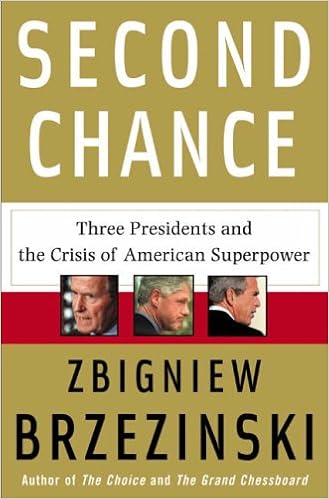
Second Chance |
|||||
|
|
|||||
|
Please Visit our Foreign Affairs Learning Center
Our Expert Tutors Can Help
With Difficult Assignments
|
|||||
|
Index |
|||||
| Following the collapse of the Soviet Union and the end of the Cold War, American leaders, without any official international blessing, simply began to act like global leaders. A close historic precedent was set in 1876 when the British Parliament, with a de facto coronation, designated Queen Victoria empress of India. Less than twenty-five years later, Britain became involved in two successive distant, self-destructive, protracted, guerrilla Boer Wars which discredited the "liberal " British empire, gave Hitler the model for concentration camps, and saw the rendition of prisoners to confinement in distant British-held islands. Symptomatic of America's supremacy was an increased frequency of military engagement in combat and coercive operations. | |||||
| America's emergence as the world's most powerful state saddled Washington
leadership with three new central missions: 1) to manage and shape central power relationships 2) to contain or terminate conflicts, prevent terrorism and the proliferation of weapons of mass destruction, and promote collective peacekeeping 3) to address more effectively the increasing intolerable inequalities of the human condition |
|||||
| How did America's first three global leaders, George H. W. Bush, William J. Clinton, and George W. Bush interpret the essence of the new era? Did they use an historically relevant vision to peruse a coherent strategy? Did their most consequential foreign policy decisions leave the world in better shape with a stronger United States? What lessons can be drawn from America's performance as the first global superpower? | |||||
| The book postulates certain basic strategic conclusions and fundamental guidelines regarding the current moment in history that ought to enlighten future American Presidents. Moreover, Americans need to ask themselves whether American society is guided by values, and its government structured in a manner, congenial to effective long-term global leadership. Do they understand the historical moment? | |||||
| As with all Presidents, our first three global leaders differed in experience and involvement. George H. W. Bush had considerable background, new what he wanted to do and chose a close friend with similar views as national security advisor. Bill Clinton held the view that it was time to correct years of presidential neglect of America's domestic affairs and for his first term filled leading foreign policy positions with people who were not strategically dominate. His second term brought more politically active figures. George W. Bush delegated national affairs to a distinguished national figure until 9/11 shocked the president out of his foreign affairs lethargy. Policy then gravitated to the vice president and highly motivated officials in the White House and Defense Department. | |||||
| We will find that3 Global Leader I was most experienced, diplomatically skillful, but was not guided by a bold vision at a very unconventional historic moment. Global Leader II , the brightest and most futuristic, lacked strategy consistence in the use of American power. Global Leader III had strong gut instincts, but no knowledge of global complexities and a temperament prone to dogmatic formulations. | |||||
|
The Mist of Victory (and the Spawning of Clashing Historical Views) Confused Expectations-The Search for Certitude |
|||||
| The defeat of the Soviet Union was the consequence of a forty-year bipartisan effort than spanned nine presidencies. Complicating official perceptions and tempering public expectations at the end of the Cold War was the fact that the world America inherited as its ward was neither historically at ease nor truly at peace. Nevertheless, America's opportunity was greater than it was in 1945, though less clear. American power faced no threat and the Atlantic alliance was strong. Even more promising was America's politically cordial relationship with the developing European Union. The rise of Asia was perceived as a distant prospect, and the leading candidate for a major role was Japan, increasingly redefined as a "Western" democracy and a member of the trilateral club with America and Europe. | |||||
| But, the formerly imperial Soviet Union was experiencing soon to be violent pangs of national separation. China, in the early stages of an impressively prudent politically guided, social transformation, was still quietly savoring the success of its semi covert strategic collaboration with America in finally defeating the Soviet invasion of Afghanistan. This was followed by a deplorable American neglect of that country's future. The issue of nuclear proliferation gained new urgency. North Korea, suddenly bereft of Soviet protection, began to seek its own atomic weapons. India's defiance of nonproliferation was more suspect, Israel's surreptitious acquisition was hardly a secret, and South Africa's efforts were being closely scrutinized. Iran, Syria, and others were strategically adrift because of the loss of Soviet military and political support for their hostility toward Israel. Lastly, the Third World lost the political and economic advantage of being a Nonaligned block and socioeconomic trouble was brewing among its politically awakened populations. | |||||
|
The Original Sin |
|||||
|
G e o r g e H. W. B
|
Summary | War on Terror | Proliferation of Weapons of Mass Destruction | ||
| Bush I had to
confront intensive, extensive global turmoil. He did a good job managing
the fall of the Soviet Union, still treating them as a preeminent
player. China's crisis, as exemplified by Tiananmen Square, was handled with
a relatively mild public rebuke and without jeopardizing the strategic
relationship that had developed between the United States and China after
President Carter's 1979 breakthrough in the normalization of
relations. But the Bush administration was caught unaware of the escalating
Yugoslav crisis. They underestimated the genuine depth of non-Russian
nationalism within the faltering states and had considerable concern
regarding the eventual collapse of "a strong center." They were
predispose to help preserve it. The lone dissenter was Secretary of Defense Chaney.
Finally, the administration was very passive toward war torn
Afghanistan with nearly 20% of its population living as refugees in Pakistan
and Iran.
|
Just days after
Bush I takes office, Soviet troops, having failed to crush persistent Afghan
resistance which was backed by a semi covert coalition of
the U.S., G.B., Pakistan., China, Saudi Arabia, and others, withdraw from
their ten year invasion of Afghanistan.
|
A top priority of the Bush administration was to make certain the Soviet nuclear arsenal did not fall into unreliable hands. A lot of energy and skill was expended to the redeployment of these weapons from newly independent Ukraine, Belarus, and Kazakhstan. | |||
| Late
in 1989, a U.N. resolution cosponsored by Pakistan and Bangladesh in
favor of a South Asia nuclear -free zone was passed, but failed because
India opposed it.
|
|||||
| The deployment of U.S. troops on the sacred ground in Saudi Arabia provided the stimulus for religious fanatics to articulate a doctrine of hate for America. The Sunni Wahabis echoed, in a somewhat different terminology, the Iranian Shiite leadership's earlier labeling of America as the "Great Satan," and a fatwa by a hitherto obscure Saudi militant (from a wealthy Saudi family) targeted America as the desecrator of holy Islamic sites and the principal sponsor of Israel. Al Qaeda thus made its appearance on the world stage. | Anxiety surfaced that North Korea might also be seeking nuclear
weapons. In 1991, to persuade her to accept International Atomic Energy
Agency supervision, the U.S. removed its nuclear weapons from South Korea,
who issued the Declaration on the Denuclearization of the Korean Peninsula.
In 1992, North Korea ratified the safeguard agreement with IAEA and admitted
to possessing small amounts of uranium and plutonium.
|
||||
| Iraq invaded Kuwait and Bush I felt that America had to respond and wisely realized that the response had to respect international law and the interest of other countries. The war ended quickly and represented Bush's greatest military victory and his most conclusive political outcome. But3, Most Americans remain blissfully unaware of the old Arab grievances against British imperial domination, the unfulfilled promise of emancipation from the Ottoman rule, and the periodically brutal repression of rising Arab nationalism. During 1992, because of contentious squabbles, extensive efforts to foster peace between Israel and her neighbors bogged down without a fundamental breakthrough. | The unfortunate result was
that Bush's unconsummated success in Iraq became the original sin of his
legacy: the inconclusive but increasingly resented and self-damaging
American involvement in the Middle East.
|
The lack of a priority concerning nonproliferation became especially apparent in late 1992 when the administration's draft Defense Planning Guideline was leaked to the press. It contained sensible and tough-minded recommendations for exploiting the fall of the Soviet Union and the defeat of Iraq. It postulated a view heavily influenced by traditional balance-of-power politics while bluntly asserting American global military superiority. The zone of U.S. predominance was to expand eastward in Europe and was to be firmly consolidated in the Middle East. The imperious overtones were tempered in the final draft by a public outcry of the March draft. The midlevel Defense Department and NSC officials who wrote the guideline were senior level officials a decade later and its principle sponsor, then the Secretary of Defense, was now Vice President Cheney. | |||
|
W C
|
The Impotence of Good Intention |
||||
| Summary | The War on Terror | Proliferation of Weapons of Mass Destruction | |||
| Wanting to stress domestics
issues, Clinton's emphasis on globalization provided a convenient formula
for melding the domestic and the foreign into a single theme and freed him
from perusing a disciplined foreign policy strategy. The second term brought
adjustments with new Secretary of State Madeline Albright strongly committed
to the expansion of NATO.
|
The Oslo Accords of 1993 established de facto Palestinian self-rule. Prime Minister Rabin and PLO leader Arafat would later share the Nobel Peace prize. The Israeli-Jordan Peace treaty meant Israel now had normal relations with two of its three immediate Moslem neighbors. In late 1995 progress came to an end when a Israeli right-wing fanatic assassinated war hero Prime Minister Rabin. |
2) A wider global system of shared security would start with more
effective impediments to the proliferation of nuclear weapons. A
danger from the use of these weapons by impoverished countries to settle
local political conflicts had emerged during the Bush presidency from North
Korea, India, Pakistan Libya, and perhaps Iran, which in 1995, signed with Russia for the construction of the Bushehr nuclear plant.
|
|||
| The disappearance
of the Soviet superpower created three significant opportunities for Clinton
to pursue his agenda of enhanced global security and cooperation: 1) Limiting the arms race was helped with the consolidation of the Soviet nuclear arsenal within Russia. Started in Bush's last year, it was completed in 1996. The 1993 Start II agreement provided significant cuts in American and Russian nuclear arsenals. 2) A more comprehensive global system of shared security was made possible by the disappearance of a bipolar world. 3) The American-European partnership was upgraded to have greater global significance. The most constructive and enduring part of the Clinton foreign policy were creating a stronger relationship with Russia, the successful enlargement of NATO, and the formation of the European Union. |
In 2000, with Israeli-Palestinian tensions rising, Clinton went for broke by calling a meeting between the parties at Camp David (much as President Carter had done twenty plus years earlier). What happened is in dispute. Arafat came to be widely blamed for refusing a generous offer and Palestine claimed the offer was never spelled out formerly, with maps. Violence soon followed and led to the second intifada (rebellion,3). During the period, U.S. policy gradually drifted from commitment to a fair settlement to an increasingly one-sided pro-Israel posture. | Within weeks of Clinton's first inauguration, North Korea refused the International Atomic Energy Agency (IAEA) demand for additional inspections and threaten withdrawal from the Nonproliferation Treaty (NPT). The Clinton administration responded with a proposal to help North Korea with a peaceful nuclear program and promised not to use force against her, but no credible punitive threat was used to balance these constructive proposals. Preemptive strikes against North Korea nuclear facility were considered in 1996 and rejected. Numerous political initiatives failed. | |||
| The issue of Iraq lingered on with periodic administration ordered air strikes against Saddam's military and a doubling of U.S. troops inn Saudi Arabia which provided grist for the mills of anti-American fundamentalists, notably, Osama bin Laden. Neoconservatives began campaigning for unilateral military action to remove Saddam before he could acquire weapons of mass destruction. Many of these people became officials in the next administration. | American opposition to Indian and Pakistani quests for nuclear weapons showed similar futility. | ||||
| The passage of the Uruguay Round of the General Agreement of Tariffs and Trade and the establishment of the World Trade Organizations marked continued progress toward global economic order. | As the North Korea saga unfolded, administration succeeded in its efforts to obtain an indefinite extension of the NPT though French and Chinese nuclear tests made these efforts more difficult. The Senates failed to ratify the Comprehensive Test Ban Treaty and this strengthen the view of many abroad that the American quest for nonproliferation was driven by essentially monopolistic motives. | ||||
| But, the liquidity crisis in Southeast Asia, Japan's financial malaise, U.S. obstruction of the Ottawa Treaty banning land mines and the Rome Statute for the new International Criminal Court which could have made American military subject to international prosecution all hinder global cooperation as did the U.S. Senate approval 95 to 0 of a resolution opposing the Kyoto Protocol. | In 1995, an Iranian overture to open its oil fields to U.S. investment resulted in President Clinton banning trade with Iran. Moderates won the 1997 Iranian election but President Clinton, fearing domestic repercussions from Israeli- and Iranian-American lobbies, chose not to react. Before long, anti American fundamentalists were back in charge. | ||||
| Clinton's charisma at home eventially lost some of its glow because of personal difficulties and rising popular sentiment against our global leadership because it required some social self-denial. | In 1993, Al
Qaeda's failed attempt to blow up the World Trade Center resulted in
retaliation bombings of their operation in Sudan and Taliban controlled Afghanistan. In 1998, Al Qaeda attack U.S. Embassies in east Africa and the U.S. retaliated by bombings their operation in Sudan and Afghanistan In 2000, Al Qaeda boomed the USS Cole, (CIA and legal action followed3). |
||||
|
Catastrophic Leadership |
|||||||
| G E O R G E
W.
B U S H |
Summary | War on Terror |
Proliferation of Weapons of Mass Destruction |
||||
| Bush II's choice of top associates, vice president Chaney, secretary of defense Powell, and secretary of defense Rumsfeld implied continuity with the realism of Bush I's foreign policy. Initially, they focused on Bush I's unfinished business of missile defense, military transformation, and big power relationships. | Strategically, the "war on terror" reflected the traditional imperial concerns over control of Persian Gulf resources and the neoconservative desire to enhance Israel's security by eliminating Iraq as a threat. Critical roles were held by neocons national security advisor Rice, the VP's chief of staff Libby, and Deputy Defense Secretary Wolfowitz. The later two collaborated on a 1991 strategic document articulating the case for unadulterated American global military superiority and both held strong views on the Middle East. |
The initial focus of the Bush administration was not on nuclear proliferation. |
|||||
| In 2001, at their first meeting in Ljubljana, Bush looks into Putin's soul. | 9/11 Occurs and with unanimous national and international support, the Taliban government of Afghanistan, which provided shelter to al Qaeda, was overthrown. | ||||||
| In 2002, Bush labels North Korea, Iran, and Iraq the "axis of evil ", the U.S. withdraws from the ABM treaty and the International Criminal Court Treaty, Israeli, with U.S. support, crushes the Palestine authority , congress and the UN give their approval for the use of force in Iraq. | A cleavage of what to do next developed between neoconservative Deputy defense Secretary Paul Wolfowitz, who wanted to follow-up with Iraq and Secretary of State Powell, who was mindful of the risk of a larger war. | In 2002, North Korea rejects IAEA restrictions and states that its nuclear facilities are a matter only for her and the United states to discuss. Russia begins constructing Iran's first nuclear plant at Bushehr. | |||||
| In 2003, Turkey refuses to allow U.S. troop deployment, France Germany, and Russia openly oppose the war, and weapons of mass destruction are not found. NATO takes command of the Afghanistan International Security Assistance Force. | It took a mere three weeks to destroy Saddam Hussein's regime. By elevating the 9/11 criminal attack into an allegorical declaration of war, his advisors anointed the president with the status of "wartime" commander in chief with enhanced executive authority. The arrogance that swept the Bush administration was captured by Ron Suskind's October of 2004 New York Time Magazine story in which a senior Bush aid derisively dismissed criticism. Said the official," ... We are the empire now..." Not surprisingly, nemesis was not long in coming. | In 2003, the United States responds to North Korea's announced withdrawal from the Nonproliferation Treaty with a call for a regional response, but Russia and China block U.N. condemnation of North Korea. | |||||
| Six-Party talks (North Korea, South Korea, China, Russia, Japan, and the U.S.) concerning North Korea's nuclear program announced, Iran promises to suspend uranium enrichment, and Libya abandons its nuclear program. | |||||||
| In 2004, NATO expands by seven countries, the EU expands by ten countries, the Abu Ghraib prison scandal erupts, and resistance to U.S. occupation and sectarian strife mount in Iraq. | Terror bombings hit Madrid in 2004. | Iran reverses its pledge not to enrich uranium. | |||||
| In 2005, Kyoto Protocol, minus the U.S. goes into effect and sectarian violence in Iraq intensifies. | Terror bombings hit London and Ahmandinejad elected president of Iran. | North Korea announces it possess a nuclear weapons and Iran resumes enriching nuclear weapons. | |||||
| In 2006, Violence mounts in Palestine and Iraq, erupts in Lebanon, and resurfaces in Afghanistan. | Bush II finally accepted the international architecture demonstrated by the Six-Party talks concerning North Korean nuclear activity and explored negotiations with Iran. In the 1990's, congress had imposed an embargo on Iran. This demonstrated antagonism was elevated in 2002 Bush II proclaimed her a member of the "axis of evil. After the war, the U.S., rebuffed a an Iranian probe regarding the possibility of a dialogue on security, economic issues, and nuclear safeguards. | ||||||
| Three articles of faith, largely derived from the neocon worldview and fervently embraced by the administration, underlie decisions that transformed military success in Afghanistan into a disaster in Iraq. Terror originating from the Middle East reflected a nihilistic rage toward America that was unrelated to recent political conflicts and recent history, the political culture of the region respected force above all else, and electoral democracy could be imposed from the outside. | The cost of removing
Saddam Hussein were 1) discredited America's global leadership which limiting her capacity to affect nuclear proliferation and other issues. 2) created a geopolitical disaster diverting attention and over 300 billion dollars from the war on terror and removing the only Arab state capable of standing dong to Iran, many died. 3) increased the terrorist threat to the United States as a relabeled war as "the central front in the "war on terror" unified Islamic opinion against the U.S. and created fertile soil for new terrorist recruits. |
Bush accepts India into the nuclear club. U.S. and European negotiators offer Iran a compromise settlement or sanctions. | |||||
| Mobilizing Chinese and Russian support limiting North Koreas nuclear efforts were undermined by Bush's unilateral decision to abandon opposition to India's nuclear weapons program. | |||||||
|
Beyond 2008 |
|||||||
| Major Geopolitical Trends Adverse to The United States, 2006 | |||||||
|
1) Intensifying hostility to the West throughout the Arab World |
2. An explosive Middle East |
3. An Iran predominate in the Persian Gulf |
|||||
|
4) A volatile, nuclear-armed Pakistan |
5) A disaffected Europe |
6) A resentful Russia |
|||||
|
7) China setting up an East Asian community |
8) Japan more isolated in Asia |
9) Populist anti-U.S. wave in Latin America |
|||||
|
10) Breakdown of the nonproliferation regime |
|||||||
| Grading the Presidents | |||||||
| Bush I | Clinton | Bush II | |||||
| Atlantic Alliance | A | A | D | ||||
| Post-Soviet Space | B | B- | B- | ||||
| Far East | C+ | B- | C+ | ||||
| Middle East | B- | D | F | ||||
| Proliferation | B | D | D | ||||
| Peacekeeping | na | B+ | C | ||||
| Environment | C | B- | F | ||||
| Global Trade/Poverty | B- | A- | C- | ||||
| Overall | Solid B | Uneven C | Failed F | ||||
| Comment |
Tactical skill but missed strategic opportunities |
Major gap between potential and performance |
A simplistic dogmatic worldview prompts self-deceptive unilateralism |
||||
|
America failed to capitalize on her Cold War victory and missed two historical opportunities by failing to shape and even institutionalize an Atlantic community with a shared strategic focus and she failed to act decisively on the Israeli-Palestine problem. |
|||||||
|
America may have a second chance because Russia can not decide whether she wants to be a socially backward Eurasian authoritarian state or a genuinely modern European democracy, China has a Far Eastern rival in Japan and has to resolve the contradiction between her freewheeling economy and her bureaucratic centrist political system, and India has yet to show it can sustain unity and democracy should her religious, ethnic, and linguistically diversity become politically charged. |
|||||||
|
America's success as the World's leader will depend on her answering important questions. |
Answers are not easy. |
||||||
|
1) Is the American system structurally equipped to formulate and sustain a global policy to protect her own interests and also promotes global security and well-being? |
1) Policies with worldwide impact must no longer be
structured largely on domestic stimuli. |
||||||
|
2) Is the American society up for a sustained leadership role that requires a degree of responsible self-restraint derived from an understanding of global trends? |
Material self indulgence, personal short comings, and public ignorance about the world are in a compounding way increasing the difficulty our democracy faces in formulating a globally appealing program for effective global leadership. |
||||||
|
3) Does America intuitively sense what the global political awakening implies for her own future. |
Today's global political awakening, which is socially massive, politically radicalizing, and geographically universal, has aroused modern populist political passions, sometimes against distant targets, despite not having a unifying, Marxist like, doctrine. |
||||||
|
American paramountcy has been described as the new global empire and history shows the longevity of empires has recently, because of political awakenings and technology, shrunk dramatically. Populist activism's anti-Western character has more to do with historical experience, Western domination, than ideological or religious bias. By 2020 the Euro-Atlantic world will have only 15% of the world's population and the power shift is most evident in the increased economic power of Asia countries. |
|||||||
|
Geopolitical conclusions: |
|||||||
|
1 From the 2007 first edition 2. Table, column and row titles, and name abbreviations are by Walter Antoniotti 3. Walter's addition 4. Authors note: I have concentrated on the war on terror and nuclear proliferation at the expense of activities associated with Israel, China, Russia, Palestine, Lebanon, the new "Global Balkans" many more important topics. Please e-mail with thoughts and suggestions. This Summary Is Under Construction
|
|||||||