Our Expert Tutors Can Help With Difficult Assignments. 
Economics   
Statistics    
Accounting
Graduate Education
Mathematics

Writing Services

Chapter 21 How Cost of Production Affects Supply 

To Print from an Internet browser, set type size to Smaller by choosing View, Text Size and Smaller,
and choose File and Print.You may also need to set the margins to 0.25 inches. 
  

Our Current Events Internet Library has an interesting economics section.
Please Blog People About these Free Sites Using

Free Book Summaries- 3 New York Times Bestsellers

  I. Introduction
 
   A. The last two chapters were an in-depth exploration of demand.
 
   B. This chapter will explore costs, the key determinate of supply.
  
  C. Math Review is a short dynamic review of basic math skills for microeconomics from R. L. Reynolds of Boise St. University.
  
  D. McConnell Economics Books, including the 18th edition, are one of many source of material included in this chapter.
   
 E. Our Current Events Internet Library has an interesting economics section.
II. Understanding costs
     A. Costs are the dollars paid for the factors of production.
     B. Opportunity cost is the value of the best alternate use, e.g., the opportunity cost of labor is the value that 
          could have been
received from using capital.
     C. Explicit costs versus implicit costs
          1. Explicit costs require an out-of-pocket expenditure, e.g., wages, materials, and overhead.
          2. Implicit costs do not require an outlay, e.g., forgone interest on invested capital, forgone rent a company could receive by renting a facility used in the business,
              forgone wages for uncompensated
efforts by family members in a family-operated business, forgone entrepreneurial income you could earn by managing another business.
              Included a normal return on investment, which is the minimum
amount required to keep resources employed at their current use. 
     D. Accounting profits versus economic profits
         1. Accounting profit is revenue minus explicit costs.
         2. Economic profit is revenue minus explicit plus implicit costs.
         3 Since implicit cost includes a payment for the risk factor part of  interest and payment for entrepreneurial skill.
         4. This means
            
 a.  Normal Profit is a cost  to economists and paid for as an explicit cost.
              b. In the long run competition causes economic profit to be zero.
              c For another explanation read the beginning of
    E. Short run versus long run costs  
        1. In the short run costs are both fixed and variable.
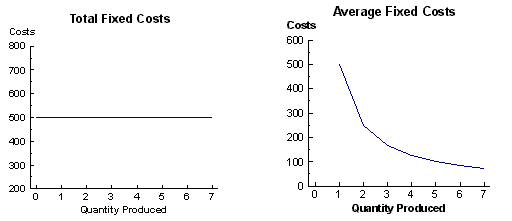
            a. Fixed costs do not vary with production, e.g., plant and equipment, property taxes, most overhead, etc.
            b. Variable costs vary directly with production, e.g., labor and materials 
            c. Marginal cost is the change in total costs which results from making one more unit.
        2. In the long run all costs are variable as fixed costs may increase. 
   F. Diminishing returns:  
        1. Adding a variable resource (labor) to a fixed resource (capital) will increase production for a while.
        2. At some
point the rate of increase declines and eventually becomes negative. 
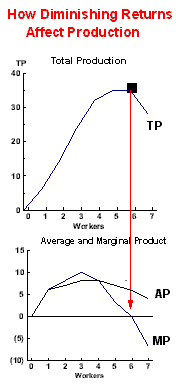
        3. Diminishing returns affect both the production of labor and cost of production.
        4. Example: When eating at my mother's house I would say using three people to do the dishes didn't make sense
            because the third person just got in the way. She agreed so me and my sisters did the dishes.
        5.
Diminishing returns - Wikipedia has additional information.
        6. Econ Concepts in 60 Seconds Video on The Law of Diminishing Marginal Returns reviews diminishing returns and previews section III on labor productivity.

III. Understanding Labor Productivity

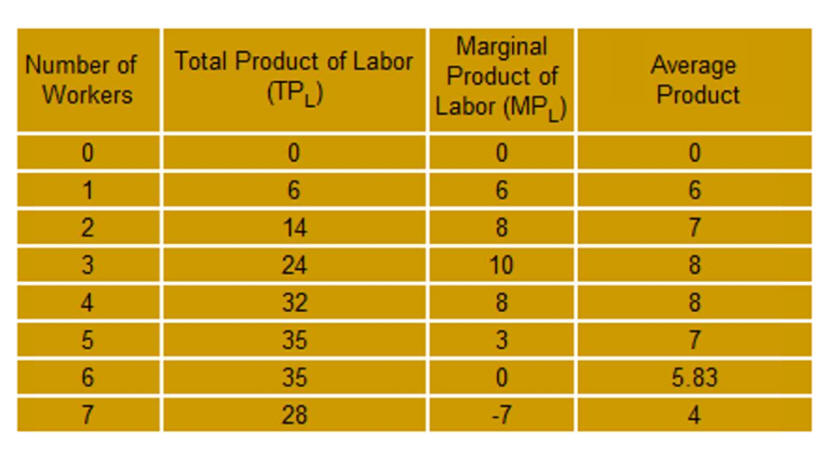
Total product of labor (TPL) measures total production occurring as more workers are added to a production process containing fixed resources.

Marginal product of labor (MPL) measures the change in the TPL which occurs as more workers are added to a production process containing fixed resources.

Average product of labor (APL) measures the average production of all workers as additional workers are added to a production process containing fixed resources.

Note: MPL should be plotted at the mid-point on the x-axis.

Number of 
Workers
Total Product of Labor (TPL) Marginal Product of Labor (MPL) Average
 Product
Stage 1 Increasing marginal returns to scale (getting bigger)

because of worker specialization.


Stage 2 Decrease marginal
returns to scale because of fixed resources.


Stage 3 Negative marginal returns to scale because workers are in the way of each other.

0 0 0 0
1 6 6 6
2 14 8 7
3 24 10 8
4 32 8 8
5 35 3 7
6 35 0 5.83
7 28 -7 4

IV. Determining Production Costs Note:

     A. Econ Concepts in 60 Second Video on  Per Unit Costs Curves MC, ATC, AVC ... is a dynamic demonstration.
     B. Static demonstration

 
Units 
Produced
(1)
Total Fixed 
Costs
(2)
Total Variable Costs
(3)
Total 
Costs
(2+3)
Marginal Costs is change in TC
per unit
Average Fixed Costs
(2/1)
Average Variable Costs
(3/1)
Average Total Costs (2+3)/1
0 500 0 500 NA      
1 500 500 1000 500 500 500 1000
2 500 900 1400 400 250 450 700
3 500 1200 1700 300 167 400 567
4 500 1500 2000 300 125 375 500
5 500 1900 2400 400 100 380 480
6 500 2400 2900 500 83 400 483
7 500 3000 3500 600 71 429 500

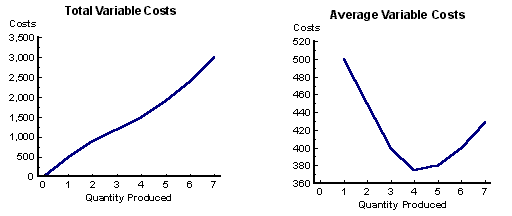
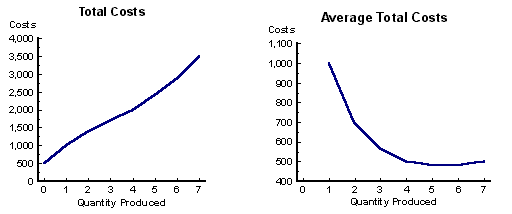
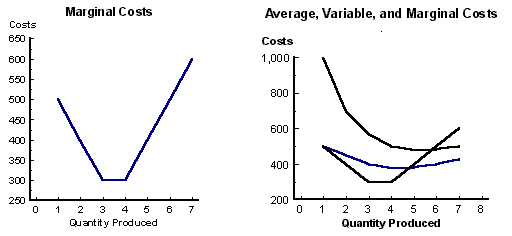
   V. Graphing Production Costs 


VI. Productivity affects costs 

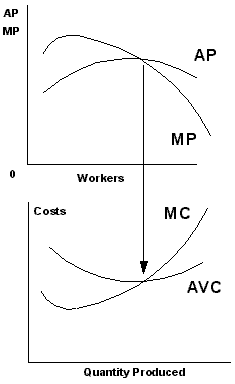
Note that AV is the mirror image of AP and MC is the mirror image of MP.

Analysis:

At low quantities MP is above AP so AP is rising. As MP starts to fall AP flattens but continues to rise because MP is still higher. When MP drops below AP, AP immediately begins to decrease indicating the intersection must be AP's highest point.

At low quantities MC is below AVC so AVC is falling. As MC starts to rise AVC flattens but continues to decrease because MC is still lower. When MC rises above AVC, AVC immediately begins to rise indicating the intersection must be AVC's lowest point.


Free Book Summaries- 3 New York Times Bestsellers
Two FREE Audiobooks RISK-FREE from Audible

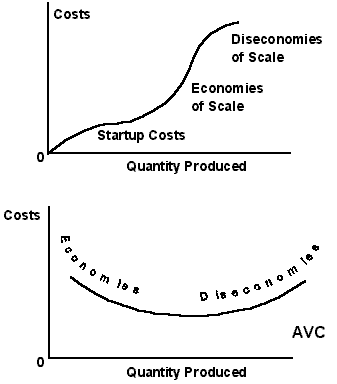
VII. Total variable costs are not a straight line but an S-shaped curve.
VIII.
Economies and diseconomies of scale

Start-up costs cause the curve to rise quickly at low levels of production.   Examples include Incorporating, legal and accounting, Licenses and permits, Remodeling, Rent, Security Deposit or Real Estate Purchase, Signage and marketing materials, Initial inventory Supplies, Furniture and Equipment.


Economies
of scale make production very efficient causing
the curve to flatten out over a considerable range of production. Examples include labor/management specialization, volume discounts, and use of by-product. Those wanting additional reading see What Are Economies Of Scale? from www.investopedia.com.


Diseconomies of scale cause production to be inefficient and result in the curve rising sharply as maximum capacity is approached. Examples include Bureaucracy and diminishing returns. Japanese flexible production techniques enhance economies of scale and stretched out the low point on the AVC line. These techniques have been adopted by manufacturers around the world.
Those wanting additional information should see
Diseconomy of scale - Wikipedia, the free encyclopedia.

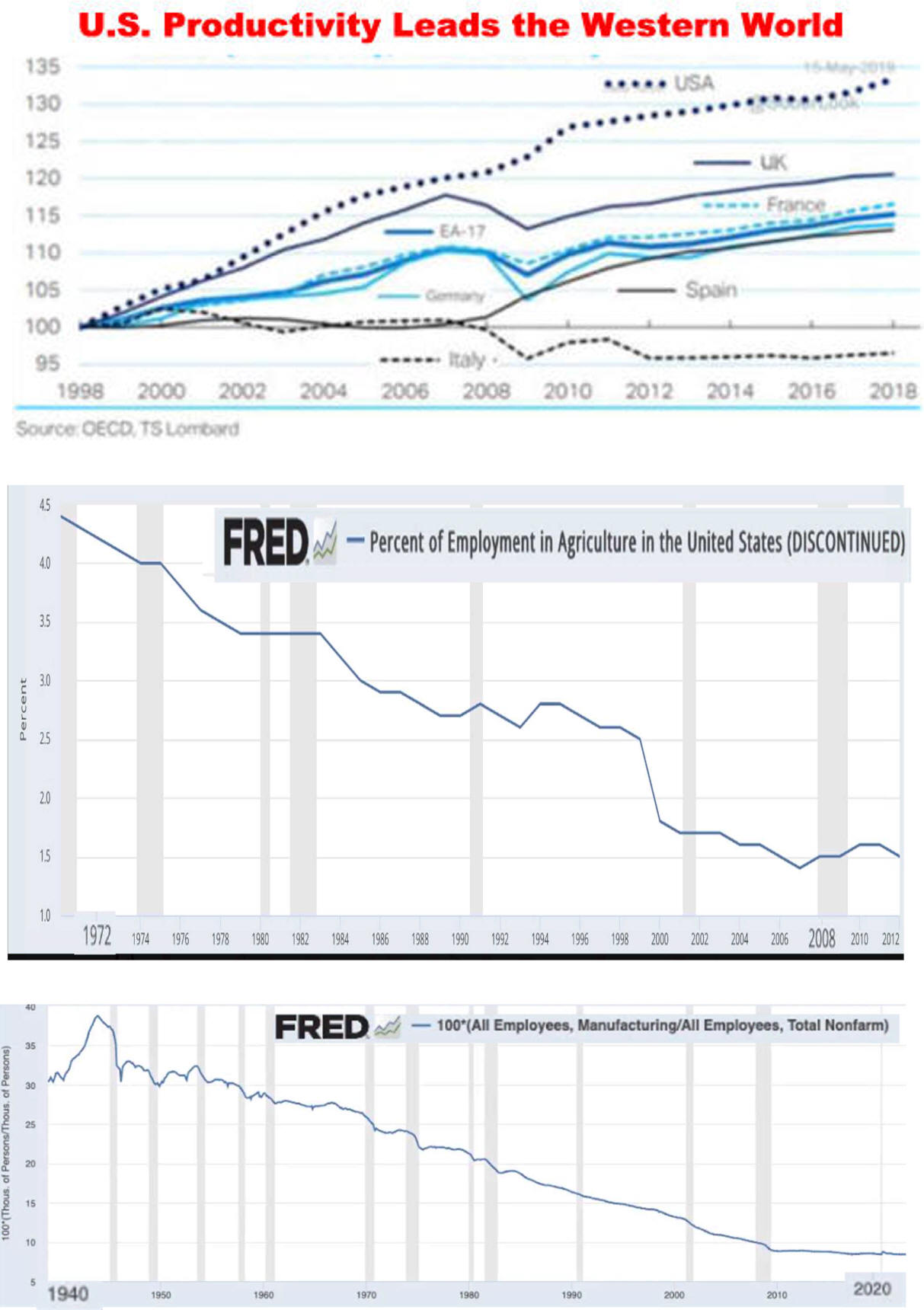
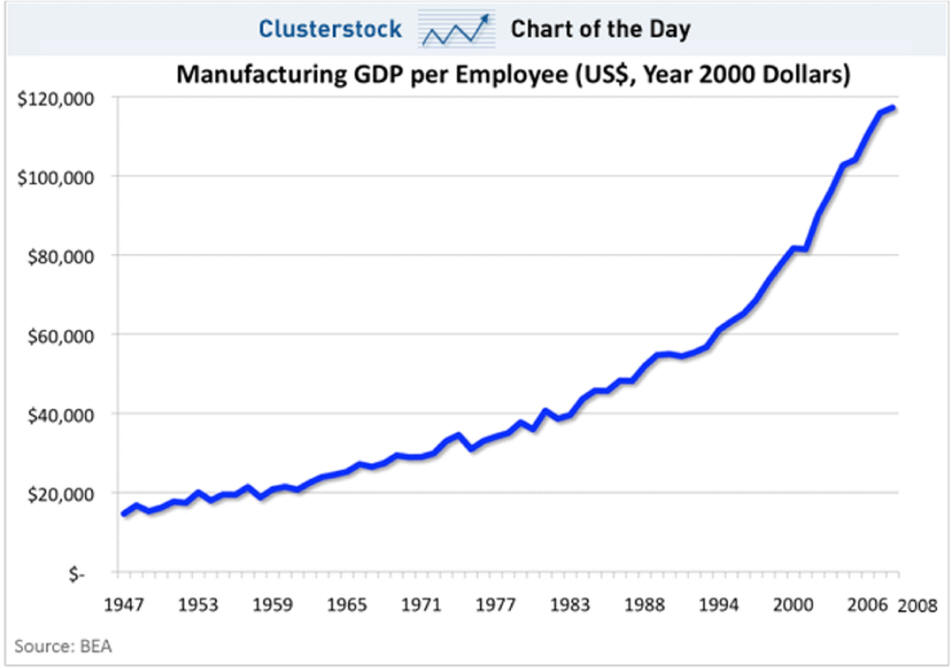
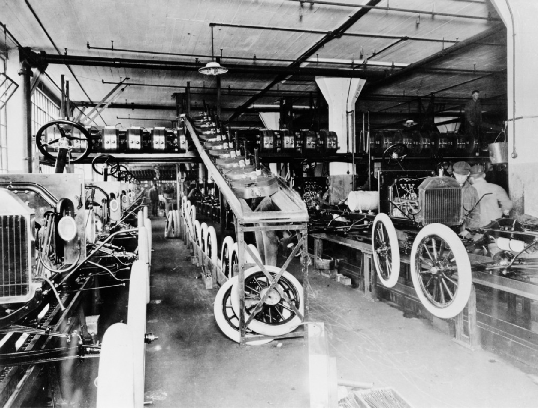
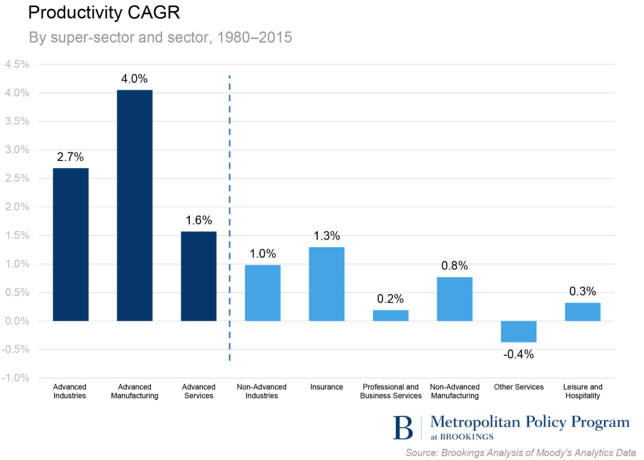
Economies of scale for all manufacturing.
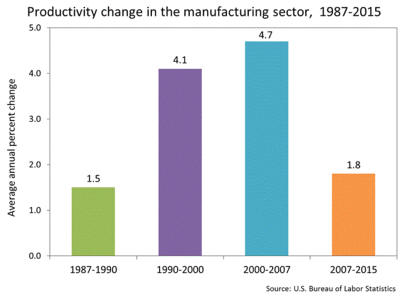
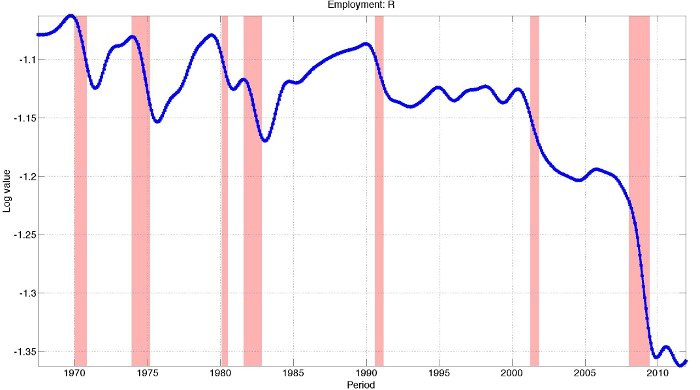
From 1950 t0 2004 manufacturing workers dropped from 35 percent of the labor force to 13 percent. Yet production went up dramatically.

IX. Long run costs by industry dynamic models from amosweb, a leader in economics education.
    
 A. constant-cost industry
      B. decreasing-cost industry
      C. increasing-cost industry

X. Our Economics Learning Center is for students, teachers, and professionals.


Last Chapter  Click on picture to view these Books at Amazon.com

covercovercover

Used Prices may be lower

Free Book Summaries- 3 New York Times Bestsellers
Chapter 21 Class Discussion Questions
Chapter 21 Homework Questions
Next Chapter 
Table of Contents
Economics Free Stuff