|
|
eBooks Search Put
Read Aloud in if you only want titles that can be read aloud.
|
|
Decision-Making Information
|
|
|
1. No One Pays
More Federal Taxes especially IBM's CEO |
6. Cutting the Federal Budget
from OMB and CBO. |
|
Other Topics Economics The War Social Security Education Health Miscellaneous The Bottom Line- Housing Educating the Class of 2030 & 1 Pg Summary of 2030 |
|
| May News
“For
all the millennia before this in human history,” Coburn says, “it was
all about tuberculosis and diarrheal diseases and all the other
infectious disease. The idea that anybody lived long enough to be
confronting chronic diseases is a new invention. Average life expectancy
was 45 years old at the turn of the century. You didn’t have
85-year-olds with chronic diseases." Editors Note: The next time someone talks about the good old days suggest they go back to the 1950's when kids got measles, mumps, chicken pox and cavities by the hundreds. I hated the low speed drill used by my dentist who never used shots to kill the pain. My neighbor Eddie got polio at 13 years of age.
|
Brilliant.org runs a weekly
math contest to find the brightest young people from around the
world. So far, 70,000 people from 155 countries have taken part. In a similar vein, a number of startups use the Internet to organize groups to solve really difficult science/mathematics problems. Participants agree ahead of time to share profits with those running the contest. This means the natural sciences will make even greater contributions to our well-being. Not to be left out, the social sciences and education are spending many hours trying to get Race to the Top (Flop) federal educational grants. Delaware won $100,000,000 and is very proud that 3) An elaborate recurring five hour session of teacher peer assistance has been instituted. You get what you pay for doesn't apply. There were a lot of really good women teacher years ago but now they are lawyers, business women, and scientists. Rather than pay they get Psychic income. I heard this on Bloomberg's weekly education show and can't remember how often this takes place 4) A 16 school(?) pilot programming immersing primary school students in either Spanish or Chinese has been institute, Fine but what did they eliminate from the curriculum because the brain and student willingness is fixed over extended period? That's why programs that measured well but eventially accomplish little academic improvement. Is it voluntary magnet program or did they just choose districts? Are all students, not just those with gifted language skills, required to be in the program. If its required by all students, the collateral damage will be immense. My sixteen word Race to the Top proposal for
secondary education. Please |
|
April News
Obama-Signs-Bill-Killing-Anti-Corruption-Pro-Transparency-STOCK-Act-Provisions
meaning congress still has two ways to be political, accepting money and legal insider
trading.
|
Please Visit Our e-mail the editor at antonw@ix.netcom.com
|
|
March News from seekingalpha.com 3/1/13 Editors' Note: The strong economic period from 1985 to 2007 made many well intentioned commentators to young an unprepared to analyze the current period. I'm thinking of people like avid Brooks and Charlie Rose. They are not 95ers, like Rush Limbo and Racial Maddow who say only things their audience wants to hear, things that are often negative about the other side.
|
People Not Voting Their Pocketbook is Literally Killing the Poor Southern European states-- Italy, Greece, Portages, and Spain insist on voting their pocketbook to the detriment of society and rich states--Germany and other northern states do want to pay the bill. In the US, southern states not only do not vote their pocketbook they refuse help like Obamacare coming from the north. US south easily defeats the European south in the economically stupid war!
Special Notes: econintersect.com/ has more in Income Inequality Can you think of anyone else? |
|
February 2013 News for Understanding/Decision Making
Please
|
My Bucket Trip to the Capital One Football Bowl Game revealed:
4) The high school cheer leaders who perform for free are the team winners from summer camps and whose parents get to pay for a four-day stay at Disney World. 5) In one Florida town the parent of a cheerleaders pays a $400 for yearly expenses. 6) A church group volunteered clean up the seldom used stadium. 7) After the game the police, working OT, did a great job helping me find my car. The people watching a parking lot near my lot had no interest in seeing that what happened to me, taking about an hour to find my car, did not happen to those using their lot next year.
|
|
January's 2013 News for Understanding/Decision Making Investing in Education Data from collegemeasures.org/ Descriptions added.
From Community college grads out-earn bachelor's degree holders See Economics of a College Education
Too Many Lawyers |
What I'm thinking about. The Paranoia caused by media attention from the Newtown, Connecticut tragedy is driving me crazy. Our children are safer than ever before. Does anyone want to go back to the 1950 when my parents had to worry about polio, measles, mumps, chicken pox, and whooping cough. The country was half its current size and Interstate Highways and living in the suburbs was in the future yet we managed to accumulate 50,000 auto deaths per year due to unsafe cars with no seatbelts of any kind? What about bike helmets? Yes we have people who have problems that result in their using firearms to destroy lives. Changing these people will take a long time as we know that people have changed little since Cain killed Able. Was Cain a banker, a neoconservative or just having a difficult life? We could get rid of guns but member of the NRA are not willing to make the sacrifice of their individual freedoms to benefit the country. They seem to think that because it is not the complete solution, it should not be part of a solution.
In the U.S. people not only insist meat handlers use gloves, they want
them changing gloves when changing foods! At Wal-Mart shoppers are
using hand wipes to clean their hands on the way in. Why on the way in?.
Did you have dirty hands? Why not on the way out since my guess is
Wal-Mart has a germ problem and put the hand wipes where people will was
their hands on the way in. Problem is the people with germy hands are
not the type to clean them before entering Wal-Mart. I'm not immune but
I do use the handy wipes on the way out! |
|
Stories of the Month January 2013,
http://www.epi.org With Democrats, especially in Florida, going crazy because a chain-weighted CPI would cost SS recipients about $5 per month. |
Green: Franking and Regulation
National Oceanic and Atmospheric Administration (NOAA) findings that 4%
of the methane produced at a field near Denver was escaping into the
atmosphere. A Utah study that suggested an even higher rate of methane
emissions—9% of the total production. NOAA describes methane as 25 times
more potent of a greenhouse gas than CO2. The percentage of methane
leaked is key to determining whether switching to natural gas from
coal-fired generators has a climate benefit; it must be less than 3.2%
for that to be the case, he writes. The Obama administration has
embraced Fracking as part of its "all-of-the-above" energy strategy.
Earth Warming Slows down A
University of Colorado Boulder dtram looking for clues about why Earth
did not warm as much as scientists expected between 2000 and 2010 India
and China that are estimated to have increased sulfur dioxide emissions
by about 60% from 2000 to 2010 through coal burning as small amounts of
sulfur dioxide emissions from Earth’s surface rise 12 to 20 miles into
the the atmosphere, where chemical reactions create sulfuric acid and
water particles that reflect sunlight back to space, cooling the planet
and Supply of energy is still a big issue! peak-oil-the-shale-boom-and-our-energy-future-interview-with-dave-summers Please
|
China's use of coal negates all the rest
of the world is doing to be more Green.
Chart from www.businessweek.com/articles/2013-03-21
|
|
What I'm Thinking About Windows 8 is designed to function with mobile, touch-screen communication devises, it is not really good for a stationary lap top. Why buy insurance, point, line, and trend
people vs. analysts. Analysts ask questions. Editors note: Thoughts arose as I listened to ESPN radio commentators discusses whether Rex Ryan should be fired. No analysis, mainly a line looking back with a little, straight line look into the future.
|
||
|
Stories of the Month
November 2012
Economist Magazine 12/12
Please
|
December Our Asian Alias Easily Outspend China
http://www.businessinsider.com 12/12 |
The fight over Right-to Work laws in Michigan means that some
people want a job so badly that they are willing to ignore our
income distribution problem which will take care of itself, though at a
slower rate than some would like. |
It will take much last time than the last 75 year adjustment. It ended with the great depression and lasted ten years WWII was a big price to pay, but it began the 40 years of good times. It will not be easy, but try to be understanding. Please remember, psychologist agree that losing one's job is the second most trying experience one can endure. Those poor people in Connecticut are going through number one. |
|
Stories of the Month October
2012 Economist Magazine10/13/12
|
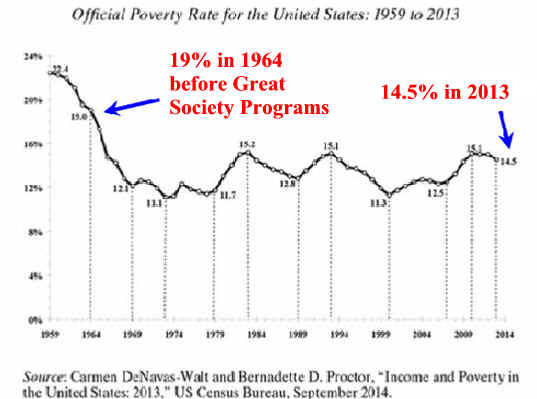
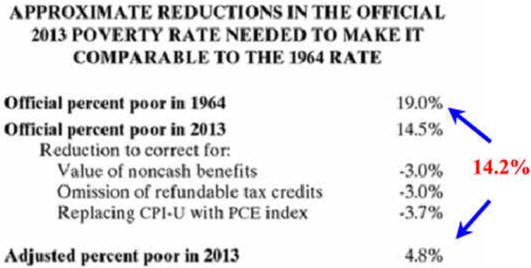
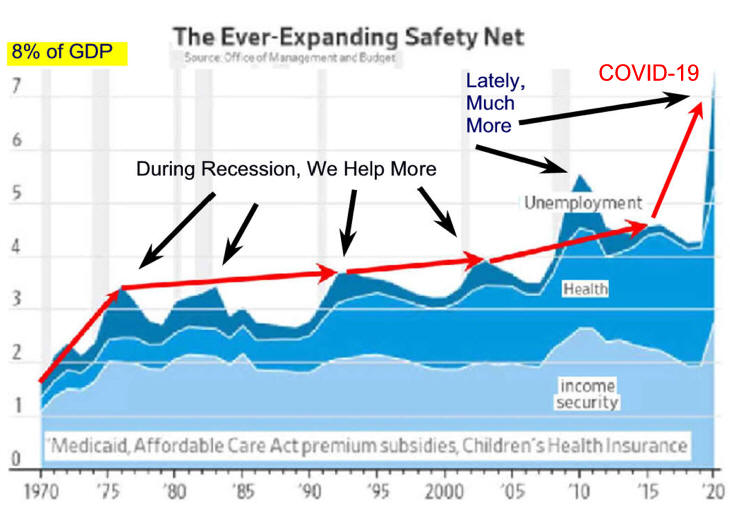
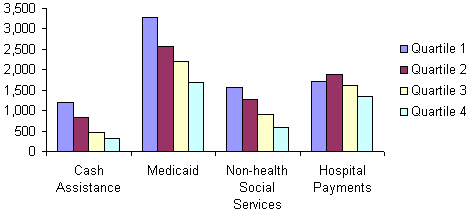
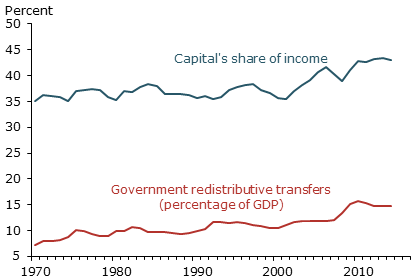
Editors Note: Since 1990, transfer payments, tax credits, etc. have really helped the poor. The return of the stock market since 2009, (not shown) has the top 1% flying high again.
|
Editors Note: This is the same country that tried to kill a young
girl for wanting to go to school. Maybe we should just leave, period.
|
|
|
Special Election Data Bush tax cuts through 2020: $3.5 trillion.* Income tax cut < $250,000 $1,184 billion
63% * This analysis excludes the estate
and gift tax cuts. Data: Joint Committee on Taxation, Treasury Dept. and Bloomberg Businessweek |
Election 1) Debt will continue to come under scrutiny with the cost of Obama Care added to private and public underfunded pensions, social security, and big time military spending. Here is some data and my two cents printed in red. The Big Secret Behind U.S. Federal Debt 2) Health Care will be a main topic of election discussions as voters choose
between the president and state officials who have budget problems and need
decide on accepting the cost of Obamacare's expanded Medicaid program. Here is some data,
comments from mainstream media and comments in red from yours truly,
Professor
A. 3) Education in a Capitalistic Democracy requires we look at U.S. Education vs. Germany and Britain, Our Biggest Value Added Competitors is a subject I became interested in when I semi retired in 1989. It lead me Individualized Curriculums- a way to improve education, keep valuable teachers, and lower cost. 4) Election Economics page 2 e-mail antonw@ix.netcom.com |
||
|
Charts of the Month for September of 2012
|
from http://online.wsj.com/article/
|
Chart of the Month for August
|
July
Chart of the Month 2012
|
What I'm Thinking About
Medium Size Business, with sales between 10 million and a
billion added 2.2 million jobs last year while large business lost 3.7
million. Heaven forbid if they and small business lower employment
because of Obama Care. Small business because its an added expense
they can't afford, medium sized because it is more expensive than there
current plans.
Like many, I wonder why I live in my head rather than someone else's head. Of 6 or 7 billion people, why am I me? Looking very similar to my older brother, I figured that was genetic. Having my younger sister's personality, I figured it was nurture. You know, the Pavlov's dog part of our being. Now it turns out that that too was genes! If that's the case, there had better be a page two or the entire experience has been a pain in the poop! |
|
June Chart of the Month of 2012
|
|
Chart of the Month, May of 2012 Keynesians 1, Austrians (i.e. Germany) 0
Editors Notes: What happens to growth and inflation will determine the winner. |
What I'm Thinking About
Genetic adjustment to misquotes may severely
limit their ability to cause malaria. When conservatives read this or hear
the ads of the young children with asthma wheeze, don't they feel a little
guilty for slowing down advancements from genetic medicine. |
|
|
![]()
As of 2/16/13 Europe was still in recession. |
![]() Germany adjusted early when world growth was high, Spain is going through the pain, France and Italy and France are delaying the inevitable. |
||
|
Score Update 2-0 as voters in the Ireland, Italy, Spain, the Netherlands, and maybe France if they vote down German demanded austerity on May 6, 2012 election. They did so we will see. August 18, 2012 U.S. real growth continues, though
weak, U.S. as a safe place to store wealth is keeping interest rates low and politicians may not act until there is "blood in the streets" economist magazine 8/18/12 p. 47 |
4/3/13 WSJ Real Time Economics |
||
|
|
|||
|
Louisiana voting for Santorum
is like Afghanistan asking U.S. to leave. Both are proud people who don't feel the perceived gains a foreign authority say will follow are worth the impositions and conditions imposed by said authority. |
With Florida trying to limit the right to vote, I checked it out at infoplease.com/timelines/voting | ||
|
The End of Our Debt
Cycle Deleveraging is much more difficult than managing a business cycle. It requires a "combination of debt restructuring and write-offs, austerity, wealth transfer from the rich to the poor, and money printing." Done with balance, GDP can grow slightly more than nominal interest rates. The first and last requirements have been done by Bernanke, the states are doing some austerity, and President Obama is trying to going after the rich. Europe is concentrating on austerity with some printing of money by the ECB to solve liquidity problems. Sovereign debt solvency will hurt bank solvency until there is a political solution. My guess is some gives backs by government union workers will be required with changes to entitlements limited to those under sixty and delays in the implementation of Obama care. Adopted from Ray Dalio: Man and machine | The Economist. |
|||
|
April of 2012 Story of the month
Editors Note: State pensions are also high for those at the top
with 12,199 retired California government workers
receive pensions in excess of $100,00 and the top 10 receiving
>$250,000. Please |
Of course, the system is not set up for
singles like myself. Married people with children and
the poor receive a much more of a benefits relative to their payments. Now gays want equal rights for federal tax purposes. I wouldn't
mind if they made the marriage tax benefits dependent on being financially
responsible for children Heterosexuals without children would lose the
benefit until they had or adopted children. Gays, to receive the benefit,
would
have to adopt American children. Always wonder what black Americans
thought when they see white Americans adopting Asian children? |
|
|
March of 2012 Story of the month
Chinese
Yuan Exchange rate
|
As a Result
5/26/12 Economist Magazine |
Salary Increases
will Keep
|
|
February of 2012 Story of
the Month
Recent Debt Accumulation by Country.
|
America is currently paying less on an annual basis to finance its debt
than it was paying in the '90s.
http://www.businessinsider.com |
|
|
January of 2012 Story of the Month
|
What U.S. politicians know The Germany government spent $1.9 trillion modernizing East Germany. It caused high unemployment and slow growth which continued into 2003. Social Democrat Chancellor Gerhard Schroeder, who turned the economy around by fighting unions and many in his own party to limit unemployment benefits, rein in pensions, and reform of the labor market, was not reelected in 2005. From The German Economic Colossus Issue 1/20/12 of The Week Magazine. Information
that caught my eye. Updated continually |
|
|
10) PepsiCo, which spent $17 million to stop thirty states from passing
soda taxes to pay for health care reform, is trying to charge a $50 per month fee to employees related to smoking and obesity. Problem is that modern medicine will keep unhealthy people alive, but their quality of life will be poor and they will cost Medicare a fortune. No one in America wants to sacrifice so watching the healthy fight the unhealthy will be interesting. 11. Student loans and employment insecurity will slow housing growth for at least a decade. 12) Most of the ten largest occupations were relatively low paying, with only registered nurses, with an annual mean wage of $69,110, having an average wage above the U.S. all occupations mean of $21.74 per hour or $45,230 annually. Annual mean wages for the rest of the 10 largest occupations ranged from $18,790 for combined food preparation and serving workers to $33,120 for customer service representatives 13. German police fired 845 bullets in all of 2011, NYC police fired 84 shots at one suspect in April of 3012. Looks like Germany wins? 14. A record 6 federal fisheries returned to health last year bringing the total to 86 percent. One point five million are employed in this $183 billion dollar industry. Rebuilding the remaining 46 means $31 billion and 1/2 million jobs. 15. New accounting rules lowered the 2010 assets of public pensions funds to 76 percent to 57%.. 16. Only 55% of the 2011 law school graduates found full time employment requiring a law degree within nine months of graduation. 17. A 2001 study in five states found that medical debt contributed to 46.2% of all personal bankruptcies and in 2007, 62.1% of filers for bankruptcies claimed high medical expenses.[4] 18. Over a ten year period ending in earl 2012, the Federal Reserve has increase its duration of Treasury holding so that those lasting one or more years went from 0.04 to 0.475. With operation twist extended to the end of he year, the duration will continue to rise making future interest payments smaller. Some might think he is following in Alan's footsteps by doing whatever it take to be reappointed. 20. The 2009 CARD Act, passed at the height of credit card defaults has work very well with May defaults of $ 276 million down to 2006 levels. The peak was $821 million. Bloomberg Businessweek 7/30/12 21. In 2009, 630 cyclist died and 51,000 were injured. Makes concussions in football look insignificant. 22 The Great Indian blackout could lead to a quick fix that ignore green energy. 23. Despite losing 716,000 jobs since 2008, state and local governments still have 7.3 percent more workers than in 2000.- NY Post from The Week magazine. 24. From the shale fields of Texas and Wyoming to the Marcellus in the northeast, the U.S. Department of Energy contributed more than $100 million in direct federal research to help develop fracking, and Congress added $10 billion in tax breaks. Now, some of the biggest supporters of shale gas say the government should continue to back renewable energy research - for decades, if need be - to deliver future breakthroughs in that field. (AP) |
25. Baxter, an inexpensive flexible robot some think will be to robotic manufacturing, what the PC was to computing, goes on sates 10/12. This along with inexpensive energy because of fracking, is why the U.S. will continue to be he largest manufacturer in the world! 26. The WSJ reports that the Consumer Protection Agency already has almost 1,000 employees, over 60% make over $100,000 PER YEAR AND FIVE PERCENT MAKE OVER $200.000 PER YEAR. 27. Between the 1980's and 2012, the number of Irish men enrolled in seminary dropped from more than 150 per year to only 16 in 2012. BBC as reported in The Week. 28. Two-thirds of 53 women who died between ages 32 and 101 had male DNA which researches believed migrated from the male fetuses the women carried. The were less likely to develop Alzheimer's so it must of migrated to the brain. The women's eggs?. 29. Researchers estimate that 60% of our social mobility is determine by conception and the speed of social mobility has not changed since the Middle Ages. The Week Magazine 11/2/12, p23 30. Mostly because of Republican controlled legislatures using redistricting, Republicans control the house, 233 to 195. In Penn. won 5 of 18 went though they won the popular vote by 70,000. from Philadelphia Weekly.com and The Week Magazine of 11/23/12, p 14 31. Since 2000, the number of U.S. 5 largest cities that do not allow smoking in bars, restaurants, and the workplace has increased from one to fifty. The Week, 11/3/12 32. Court battles in California will determine if public employee unions can be forced to take haircuts in salaries and benefits or the entire cost of austerity must be born by tax payers, bond holders, and other creditors. Economist, 12/8/12, p31 33. Handsome people make 13% more than looks challenged and may have a better chance of being hired during a recession. Smithsonian, 11/12, p18 34. German and Spanish wealth states are tiring of transferring wealth to poorer states. The Economist 10/27/12 35. Paul Volker believes that Dodd/Frank's liquidation procedures for a "too big to fail" bank may very well work, especially if work being done in England to pass laws that would assist Federal Reserve liquidation actions related to said bank's foreign subsidiaries. C-Span Book2, 12/16/12 36 "University" Degree is academic code for "Respectable" degree as most college students do not do enough work or have the academic ability to earn an "University" Degree. 37. The Atlantic reports that the real price of air travel has halved since deregulation. 3/13 38. In early 2009 PO asked agencies to award fewer noncompetitive "wasteful" contracts and by 2012 agencies had responded with an increase of 8.9% increase with 87% of the $115 billion going to defense contracts. Who gets the blame, PO, former Secretary of defense Panetta, what government official lost their job? BW 3/25/13 p26 39. The federal government’s civilian workforce fell by just 2,000 in March apart from almost 12,000 cuts at the U.S. Postal Service, which of course has a different set of problems. (Total federal civilian employment is still around 2.8 million.) State-government jobs rose by 9,000 to 5.1 million, the second straight monthly increase. Local-government employment dipped by just 2,000 jobs, sitting around 14 million WSJ blog 4/2/13 40. Obama-Signs-Bill-Killing-Anti-Corruption-Pro-Transparency-STOCK-Act-Provisions so congress has two ways to be corrupt, take money and legal insider tfrading. 41. Households with less than $13,000 take-home income spend an average of $645 on lottery tickets.Salon.com 42. During FDR's 12 years there were 6 filibusters, two were to stop anti-lynching laws, in the last six years there have been 170 by Republicans to stop legislation & presidential nominees. reported in The Week from Salon.com |
|
|
Military Spending The Virginia Class submarines are arguably the most advanced nuclear
subs in the world. |
and Newport News Shat this figure has been building, which are the only two shipyards capable of building nuclear subs. The Virginias carry 38 different weapons, including Tomahawk Cruise Missiles, mines and torpedoes. While eight are currently in operation, the Department of Defense has 30 of these $2.5 billion subs budgeted. Read more: The 10 Most Expensive Weapons in the World - 24/7 Wall St. http://247wallst.com/2012/01/09/the-10-most-expensive-weapons-in-the-world/#ixzz1j0hkLMg |
|
|
Visit
|
December of 2011 Story of the Month
|
|
November of 2011 Story of the Month
|
|
|
What I'm Thinking About
e-mail
your comments
History
of the Banking Crisis |
Debt did not cause the banking crisis. Unethical, mainly Republican politicians, local bankers, financial bankers, real estate people, and home buyers were the cause. The economic slowdown was caused by over building in housing and the lack of demand caused by many people borrowing on home equity that went away Those two alone have caused a typical financial balance sheet recession where it takes seven years on average to recover the 7 million lost jobs. The real problem is future entitlements all governments have promised but pay for without a rapidly growing economy-- remember, we never paid for WWII or any war, we just grow our way out and beginning in 1980, used inflation. Both make the debt go away as a percentage of GDP.
This real problem might cause a
society breakdown that could financially hurt people like myself.
I am dependent upon SS, Medicare, and a pile of retirement
money invested in corporate and government bonds plus a small pile of
cash. All four sources could lose out big time though if this
happens, the price of everything, including medical,
would really be low and the pile of money would be worth more.
I don't worry about these things as I
can't control them. What I can control is sitting on the 15,000
dollars I would use to buy a new car, living on just annuity interest
and SS and enjoying life by watching the process unfolds.
This possible real problem was predicted
by the book Generations.
A shorted follow-up book entitled The
Forth Turning, is available in paper and audio tapes. It takes
place over 15-20 years beginning in 2010. There is also a blog
that the author stopped
contributing to December of 2010.
|
|
October 2011 Story of the Month
Editors Note: The bulk of the product went to paying health care and income to the top 1%. |
For thirty years after WWII the U.S. had a competitive advantage, World demand grew very fast, profits for U.S. firms were abnormally high, and some of this excess was passed on to unionized workers and there was a spillover to the nonunion workers. Now world supply has grown so fast-- first Germany and Japan, then S. Korea, then China, India, Brazil, Mexico. -- that profits quickly disappear unless a company becomes very cost efficient. This meant fewer workers doing more work. This resulting higher productivity reached a peak kept profits high, but productivity is now declining. But the big problem is still a lack of demand. But, manufacturing and will never pay like it did during the 30 years U.S. monopoly power. Technological advantage will result in high wages but competition in a flat world will limit the length and magnitude of worker benefits. Technology will make our "Macro-lives" longer and more enjoyable but our "Micro lives" (wages and fringe benefits) will slowly drift downward), until we start to lower the work week as Germany is doing or there is a big decrease in cost from very cheap energy or ... |
|
Business
|
Story of the Month September
Economist Edgar Feige estimated in 2009 that unreported economic activity
was costing the US government $600 billion in tax revenues, and the growth
in that number—from the Internal Revenue Service's 2001 estimate of $345
billion—indicates Editors Note: At an average of about 450 billion per
year it lost revenue, It looks like those steeling from us account to
about 4.5 trillion dollars. e-mail your comments
|
Story of the Month September #2
|
|
|
Story of the Month August 2011
|
from The Week of August 19-26
Economist Magazine 4/28/12 |
|
|
|
|
|
Business
Book Stores |
||
|
Business |
||
|
Author Ramblings e-mail your comments Making Sure Obama is not Hoover
August of 2011
|
|
Story of the Month August of 2011 will not be special.
August 1 Tradable
Jobs http://www.economicpopulist.org/
But foreigners are investing here.
http://blogs.wsj.com/economics/ 2012/08/22/foreigners-invest-in-u-s-manufacturing/ |
THE NEXT ECONOMY from the
Atlantic A series of articles about education and job creation trends that will impact the next decade. America 2020: Health Care Nation Four Horsemen of the Job-Apocalypse What If Education Fails to Fix the Jobs Crisis? The Hallowing Out of America's Middle Class
|
|
Please |
July 27, 2011 from Econmix of the NYT Where
the Job Growth Is: At the Low End A report finds that the jobs lost
in the recession were largely in the middle tier of wages, but most jobs
created in the recovery have been low-wage positions.
|
|
|
Business |
July
In 1950, the United States Steel Corporation employed 30,000 workers at
its plant in Gary, Ind. Today that factory employs only 5,000 workers. But
they produce more steel: From 2006 through 2010, Detroit automakers shed an astonishing 120,000 jobs, more than one-third their combined total... ...pay benefits and other costs from dropped from $75 to $49 an hour for Chrysler $78 to $58 for Ford. Newly hired hourly workers are paid $14 to $16 an hour, about half what veterans get and are locked into less-generous benefits than veteran workers and they will become the majority of hourly workers as others age and leave. usatoday 2011-07-26. |
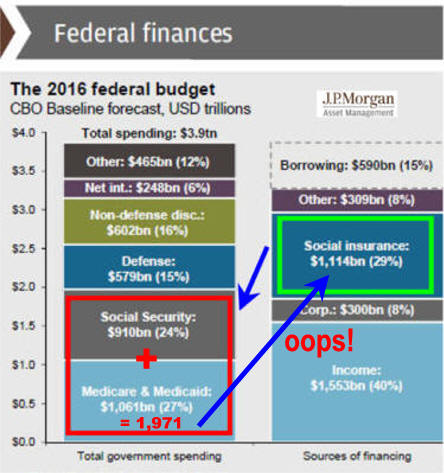
Author Ramblings 7/25/11 Been thinking that the potential taxpayers revolt is not about the money but what is bought with the money. We ran up a much bigger debt paying for WWII and got little since our battle against Fascism was replaced with a battle against Communism. Ask anyone angry about government spending to cut three of the following areas. Social Security, Medicare or Defense. They have a problem. The big question is exactly how big is the divide between the parties. The first big divide resulted in the Revolutionary War. The second, the Civil War. Is this the third big divide? |
| In 2005 the median income for a family of four was
$67,000. June 21, 2011 Are Taxes High or Low? A Further Look NYT
|
Author Ramblings
Got
some Bad News Today 6/17 6/15 On extending
the payroll tax cut |
|
|
Need a Private Statistics |
6/14 The
Lost Decade? You Mean Another One?
|
Author Ramblings 6/8 Bloomberg
Surveillance broadcasting from England taught me |
| May of 2011 Federal Spending in 2005 billions of dollars Source [Excel 39k] | [PDF 75k] | ||||||||||
| Selected Years | 1990 | 2000 | 2005 | 2006 | 2007 | 2008 | 2009 | 2010 |
Change |
|
| Direct payments to individuals, grants to State and Local Governments, other grants | 903 | 1291 | 1640 | 1693 | 1742 | 1801 | 2079 | 2365 |
1,461 |
|
|
National defense |
461 |
361 |
495 |
499 |
509 |
549 |
580 |
626 |
165 |
|
|
Non discretionary |
279 |
191 |
218 |
218 |
167 |
200 |
440 |
226 | -53 | |
|
Net Interest |
256 |
251 |
184 |
219 |
223 |
232 |
169 |
168 |
-87 |
|
|
Undistributed offsetting receipts |
-67 |
-53 |
-65 |
-66 |
-76 |
-78 |
-82 |
-70 |
-3 |
|
|
Total in Constant 2005 Billions of $ |
1,832 |
2,041 |
2,472 |
2,564 |
2,565 |
2,704 |
3,186 |
3,315 |
$1,483 |
|
| Change | 209 | 431 |
92 |
1 | 139 | 482 | 120 | |||
|
Bush I & Clinton |
Bush II | Obama | ||||||||
| April, 2011 Are State and Local Employees Paid too Much? from the NY Times | ||
|
May, 2011 The Rise of the McWorker The evidence points to the latter. According to a recent analysis by the National Employment Law Project (NELP), the biggest growth in private-sector job creation in the past year occurred in positions in the low-wage retail, administrative, and food service sectors of the economy. While 23% of the jobs lost in the Great Recession that followed the economic meltdown of 2008 were “low-wage” (those paying $9-$13 an hour), 49% of new jobs added in the sluggish “recovery” are in those same low-wage industries. On the other end of the spectrum, 40% of the jobs lost paid high wages ($19-$31 an hour), while a mere 14% of new jobs pay similarly high wages. For more read Welcome to the McJobs Recovery Andy Kroll, TomDispatch
|
|
|
Business |
February, 2011 Drought
in China adds pressure to world food prices source
|
|
No One Pay's More Federal Taxes March 22, 2010
|
Most Farmers Don't Even File Estate Taxes
|
Just-Released
IRS Data Show Effects of Our Radical New Greed-Is-Good Culture from openleft.com Editors Note: The 1944 current after tax income was 0.31 X 7.7 mil or about 2.4 mill, the latest CEO estimate is 0.759 x 24.3 mill or about 18.4 mill, almost nine times for the same job. Editors Note: In 1984 the average U.S. Household spent 16.8% on food, in 2011, 11.2%, a decrease of 5.6%. Business Week, 3/4/13. So what we have to do, eat and pay taxes went down! Is it me, or are the complainers a little on the greedy side! This story is copied from Jan. of 2011 e-mail antonw@ix.netcom.com |
|
|
Story of the Week March 15, 2010
|
Accounting Career Services Corporate Law Economics Education Employment Issues Desktop Publishing e-commerce Graduate Education> Industrial Products International Business Investment Management Marketing Mathematics Nursing Physics Programming Psychology Secretarial-Services Social Science Statistics Writing
|
||
| Story of the Week Feb. 15, 1010 | Story of the Week Feb. 22, 2010 | ||
|
Story of the Week Feb. 8, 2010
|
Story of the
Week Jan. 25, 2010 |
||
|
Story of the Week Jan 18, 2010 The Economist Magazine, p32 of 1/16/10 |
|||
![]() |
|||
|
December 28, 2009 Story of the
Week |
|||
| , 2009 Story of the Week |
![]() |
||
| Chart courtesy of NYT |
![]() |
||
|
|
|
||
| Why You'd Better Beware of the 'Big Shift' from Business
Week of November 23, 2009 Conventional wisdom says productivity is a key driver of corporate profitability. Yet this long-held assumption is challenged by a report from Deloitte's Center for the Edge. The study, led by John Hagel III and John Seely Brown, finds that despite major improvement in labor productivity over the past four decades, many U.S. industries have experienced "alarming" declines in return on assets (ROA), a key metric of corporate performance. The authors say that trend is being driven by what they term the "Big Shift"—a tremendous increase in competitive pressures, combined with the increasingly pervasive digital infrastructure. In a follow-up report released on Nov. 10, Hagel & Co. delve deeper into the numbers to figure out how the Big Shift is playing out in nine U.S. industries. Surprisingly, the steepest declines in ROA came in technology, telecommunications, and media—sectors traditionally regarded as innovation hotbeds. The auto industry also had a poor showing, though that's not so startling. Banking, retail, consumer products, and insurance fared better. But only two sectors, health care and aerospace/defense, saw ROA climb. Keep in mind that these industries are subject to heavy government regulation, which tends to muffle competition. |
![]() |
||
| Overall, the Deloitte report provides fodder for those, like BusinessWeek's Michael Mandel, who argue that the woes of the U.S. economy extend beyond the financial sector and began showing up well before the housing bubble. (Deloitte's Center for the Edge, "2009 Shift Index") —Edited by Harry Maurer & Cristina Linblad | |||
|
November 9 Story
of the Week |
|||
|
November 2, 2009 Story
of the Week
|
|||
| Long-Term Unemployed Are Losing Skills |
As The Economy Improves, Some Will Get More Hours Before Hiring
Begins |
||
| Others Will Re-Enter The Labor Force So Both Employment And The Rate of Unemployment Will Go Up For A While. |
Consumer Borrowing Falls Sharply so consumer demand is staying low.
|
||
![]() |
![]() |
||||
| October 12, 2009 from Credit Write downs | |||||
|
The Debt Issue
|
|
||||
|
|
|||||
|
9/13/09 USA Today
Story of the Week Salaries Down, Governments Not That Affected! |
|||||
|
|
![]()
|
||||
|
|
|
| Politics A Christmas Story The Death of Conservatism authors interview on Charlie Rose 10/2009 5 Myths About Health Care Around the World (Washington Post) 8/27/09 Historian Juan Cole & Journalist Shahan Mufti Bill Moyers speaks with historian Juan Cole and journalist Shahan Mufti about the U.S. relationship with Pakistan, how it relates to the war in Afghanistan, and why they think Pakistan is not likely to become a failed state anytime soon. A populist interpretation of the latest Boom-Bust cycle 05/09 William K. Black: CSI Bailout Bill Moyers sits down with William K. Black, the former senior regulator who cracked down on banks during the savings and loan crisis of the 1980s. Black offers his analysis of what went wrong and his critique of the bailout. Dark musings, 2009-03-24 from Steve Waldman who explains how the cost to the tax payer of the private-public partnership may be larger than it appears because the FDIC will leverages up the assets bought with a given investment. The Limits of Power Bill Moyers sits down with history and international relations expert and former US Army Colonel Andrew J. Bacevich who identifies three major problems facing our democracy: the crises of economy, government and militarism, and calls for a redefinition of the American way of life. Russia and a new democratic realism Francis Fukuyama, Financial Times Here Are Five Things Republicans Won't Tell You: Caroline Baum |
The Deficit Been
Bigger Econbrowser, March 26,2009
|
|
|
| Economics Democratic Capitalism vs. Capitalistic Democracy is from our editor. |
10/06/12
Businessinsider.7-most-illuminatingeconomic charts of 2011-12
|
|
|
|
|
|
Recent Economic History
|
Current data on
The Business Cycle.
Radio Economics A new dynamic for the Middle East Jim Hamilton, Econbrowser Jim Hamilton, Econbrowser U.S. Expansion May Be First in Six Decades to End Without Income Recovery Bootstrap Theory of Oil Prices by Anthony de Jasay explains why speculators are not causing high oil prices. Obama vs. McCain on Taxes, Economy, Social Security Podcast from Bloomberg The Shock Doctrine: The evil of “Disaster Capitalism”, a book report video was posted to the Crooks and Liars blog on December 1, 2007 Income Inequality Gap Widens By GREG IP October 12, 2007; Page A2 of the Wall Street Journal Who has the Oil from the Energy Bulletin Help Not Wanted, Congress is doing its best to lose the global talent war from The Economist Magazine of April 8, 2008 2008/05/Paul Volcker on the 2007-08 financial crisis and the Federal Reserve bailout of Bear Stearns. Investing in college: Is it worth it?
|
The
"carried interest rule" allows the managers of
private-equity funds (formerly called leveraged buyout firms) to call
their 20% bonus for success capital gains rather than income. The
bonus is in addition to the 2% of assets they get as asset managers is
taxes at 35%. One estimate has the carried interest as 1/3 of company
profits. as estimate
|
The prophets of doom Meet the Cassandra's, 14 economists, bloggers, politicians and businesspeople of all political stripes who have become the most strident critics of President Obama's stewardship of the economy. Source: The prophets of doom Andrew Leonard Salon, Apr. 16, 2009 |
||||
| Critique | Employment | Stimulus | Bank Plan | Alternate Plan |
| P Krugman, Princeton | Economist | Too Small | Won't Work | Nationalize |
| G Mankiw Harvard |
Economist |
tax cuts better, buy American is bad part | bank creditors need to accept loss |
|
| S Johnson& R. Kurtz |
Blog founder MIT Professor |
Too Small | Won't work | Oligarchs should be put into receivership |
| N Roubini, NYU | Economist | fewer tax cuts, better international coordination | Changed mind, plan is viable | Nationalize |
| W. Buiter London Sch of Econ |
Economist | Won't work | Its financial shenanigans | close zombie banks |
| M Wolf Fin Times |
Ass Ed and Fin Commentator |
Not large enough if others don't help more | Won't work | close zombie banks |
| W Black U of Missouri |
Economist | Too Small | designed to cover up fraud by banker | put into receivership |
| D Baker Center for Econ &Policy Research |
Co-director | Too Small | Won't Work | banks getting too much, taxpayers too little |
Cutting Military Bases and other costs 2/8/12
Rather
than asking congress for more money for Alzheimer's research, President Obama
should
ask that half the savings from closing military basis be used to finance said
research. It is about time
he educate people on the opportunity cost of military spending.
Now that ewe got Bin
Laden, The War is Over 5/1/11
Presidents Obama and President Bush should have a
fireside chat with the American people. From the Oval Office
our current president would thank his predecessor for having the foresight and gumption
to make sure Bin Laden
was not able to manage a world wide organized terrorist movement. Al Qaeda
has been dispersed to many parts
of the world and their leader is dead. President Bush should thank President
Obama for continuing the fight,
thank the American people for making the financial and personal sacrifice
needed to continue an unpleasant task,
and thank American soldiers and law enforcement officials for making us
safer. Both men should warn that as it was before 9/11,
terrorist groups of all types from many cultures will attack cultures that
differ. But the war is over! We can now direct
our maximum attention to making sure terrorist do not get a nuclear bomb, a
difficult but less demanding task.
Both men should agree that we are not now , and must protect against
creating, the Orwellian world of 1984.
Guest Post: Instead of Fixing the U.S. Economy or Creating Jobs for
AMERICANS, Obama Will Spend The Money in Afghanistan and Iraq
4 Nov 2009 11:34 AM PST The Economist,
November 3-9,2007, page 17 of A special report on religion and public
life.
" One great irony of the war on terror is that although George Bush has
declared war on jihadist, his enemy devote very little energy to fighting
him.
The jihadists' main war is not against the West but against apostate
Muslim regimes [those that reject the faith]: where they do battle with
outsiders,
it is mainly against occupying powers--Russia in Chechnya,
America in Iraq, India in Kashmir, and Israel in Pakistan."
The Limits of Power: Democracy Now interview Andrew Bacevich, a conservative historian who spent
twenty-three years serving in the US Army.
Some Facts from Wikipedia and Sunset Social Studies
Department
A Concise 20th Century History of Iran
A Concise 20th Century History of Iraq
Sunnis and Shiites at War
History
of Al Qaeda Power Point
Sunset
Al-Qaeda, Taliban, and Muslim Fundamentalism
Militant Hamas versus Moderate Fatah
in Palestine
Historical Timelines collected by George
Emery a librarian at Conesus College.
Iraq Timeline
Iraq History Timeline
The Iraq Crises Timeline
- MidEastWeb
First Gulf War Timeline
Iraq
War II Power Point
Sunset Social Studies Department
September 11, 2001: Timeline of Terrorism
- InfoPlease
Terrorist Attacks in U.S. Timeline
- InfoPlease
History of Terrorism : Timeline of Terrorist Acts
Book Reviews
from the New
York Times, Crooks and Liars, and The Economist
Blackwater
The Rise of the World's Most Powerful Mercenary
Army
Book Review-- American Dynasty
Aristocracy,
Fortune, and the Politics of Deceit in the House of Bush
Book Review-- HOUSE OF BUSH, HOUSE OF SAUD
Our Experts Can Help With
Difficult Assignments
History
Literature
Psychology
Sociology
Social Science
s
|
Education
edited by
21st Century Learning Products USA Today "Study boosts rankings of U.S. Schools" 2/16/12 The US rank of 11th in math is misleading. At the top are Hong Kong, Singapore, and Chinese Taipei, three cities whose populations are far from representative of their entire population. Japan, #4, is an economic and cultural basket case. The next four have a median score of 543 and include England at 541. USA Today"s next grouping of five countries at have a median score of 529 which is the U.S. score. Germany, our main competitor for values added exports scored 525. Australia led the next grouping at 316. Those who believe the education lobby should know the U.S. never led the world in international testing
"The media you use make no difference at all to learning," says Richard
E. Clark, director of the Center for Cognitive Technology at USC.
"Not one dang bit. And the evidence has been around for more than 50
years." from LA Times 2/4/12
College
Educated Wasting Degree
1/4/11 |
![]()
|
![]() |
![]() |
||
|
Federal Governments Enters Education
When the
/Morrill_Land-Grant_Acts was passes, substantially less than half of our children graduated H.S. Only the very rich and those very academic oriented attended private colleges. Anyone able to pay, could go to Harvard College. The Morrill act created agricultural /industrial colleges for our very rural, agricultural based economy. They were for the select few who finished H.S. and didn't want a liberal art education. |
||
![]() |
||
s
|
Health What Killed Us then an Now! Avoidable deaths | Where do all the dollars go? | Economist.com
|
The expense
of Obama Obamacare makes me nervous. 12/4/12 Here is how the article ends. "Obamacare advertised two big features, Burns says: one, the extension of health insurance to 30 million new people, and two, a plan to pay for them with efficiencies on the delivery side that ACOs are supposed to supply. "What our paper shows is that ACOs are not going to save money. They are going to cost a lot of money," Burns states, expressing frustration by what he sees as a failure to consider past experience. "Obamacare will cost a lot more than everybody thinks." Examining "the soft underbelly of Obamacare" exposes looming cost overruns with scarce prospects for improvement in the quality of health care for sick individuals or the population as a whole, he adds. Burns points to the 5% to 10% of Medicare beneficiaries who run up most of the tab or Medicare. 'That is where efforts ought to be targeted," he says. "Everybody changing everything invites more upheaval than the system can take.'" Health
|
|
|
||
![]() Question: What happened in 1978, 1984, and 2000 to increase cost? |
||
| Drugs are dangerous. In 2009 drugs killed
37,484 people, suicide 36,500, car accidents 36,284, firearms 31,228, falls
24,834, and murder 16,591. So drugs killed a lot of people but of those who
died of a drug induced death, only one in five was from an illegal drug, the
rest were prescription and non-proscription pharmaceuticals. That means
approximately 7500 people died of illegal drug use, the majority from
cocaine, heroin and amphetamines. To put this number in perspective it is
only 31% of the number of people who died of direct alcohol induced deaths
which doesn't included car accidents, suicides or other causes of death
related to alcohol abuse. Even that pales in the light of the 450,000 annual
deaths from smoking a legal product, tobacco.
opednews.com/articles/Toke-Up-The-Revolution-Wh-by-John-Kelley
|


Who has the Oil from The Big Picture blog of December 22, 2007 For more info read the Energy Bulletin.


|
The Shock Doctrine: The evil of “Disaster Capitalism” Posted: 01 Dec 2007 06:40 PM CST
There has been no shortage of books chronicling the dystopia that is the Bush Administration. And in this job, I’ve read quite a few of them. None of them have made as powerful an impact as Naomi Klein’s The Shock Doctrine. I promise you, it will change how you look at government policy and responses. It also finally sealed forever, for me at least, the coffin of the utter bollocks of Friedman economics. Listen to me carefully, you free market fanatics: FRIEDMAN. POLICIES. DO. NOT. WORK. PERIOD. His version of ‘free market economics’ STIFLES democracy. They create an oligarchy that is the opposite of democracy. Don’t believe me? Author Naomi Klein gives compelling examples in history proving that “Disaster Capitalism” has been the foundation of government’s actions and how none of it has been done for the benefit of the populace. |
Al-Qaeda
Jan 31st 2008
From The Economist print edition

TERRORISTS are a bit like you and me, or so Marc Sageman suggests. It might be comforting to think that angry young Islamists are crazed psychopaths or sex-starved adolescents who have been brainwashed in malign madrassas. But Mr Sageman, a senior fellow at the Philadelphia-based Foreign Policy Research Institute, explodes each of these myths, and others besides, in an unsettling account of how al-Qaeda has evolved from the organization headed by Osama bin Laden into an amorphous movement—a “leaderless jihad”.
Mr. Sageman is a leading advocate of what is called the “buddy” theory of terrorism. He has spent much time asking why well-educated young men, from middle-class backgrounds, often with a secular education and wives and children, become suicide bombers. He suggests that radicalization is a collective rather than an individual process in which friendship and kinship are key components.
The process has four stages. The initial trigger is a sense of moral outrage, usually over some incident of Muslim suffering in Iraq, Palestine, Chechnya or elsewhere. This acquires a broader context, becoming part of what Mr. Sageman calls a “morality play” in which Islam and the West are seen to be at war. In stage three, the global and the local are fused, as geopolitical grievance resonates with personal experience of discrimination or joblessness. And finally the individual joins a terrorist cell, which becomes a surrogate family, nurturing the jihadist world-view and preparing the initiate for martyrdom. Many Muslims pass through the first three phases; only a few take the final step.
Mr. Sageman has unusual credentials: a former CIA officer, he is also a forensic psychiatrist and a counter-terrorism consultant. He published the first version of his theory three years ago in an influential book, “Understanding Terror Networks”. His aim, to put the study of this new kind of terrorism on to a scientific footing, has not changed. But al-Qaeda has, and the task of analyzing it has become more complex.
In his new book Mr. Sageman's sample of militants has grown from 172 to 500. He gives more prominence to Europe, where, after the London and Madrid bombings and other thwarted attempts, a new front-line has opened up. He devotes a chapter to the internet. Crucially, he argues that most of today's suicide bombers have little or no link with the original al-Qaeda (dubbed “al-Qaeda central”) but are part of a broader, more amorphous phenomenon which he calls the “al-Qaeda social movement”. Mr. Sageman is skeptical of the view, which gathered weight last year, that “al-Qaeda central” is resurgent. Rather, it is the mutual attraction of freelance jihadists, outraged by the Iraq war and increasingly mobilized online, which should worry us most.
Like others, Mr. Sageman believes the Iraq war, which appeared to legitimize the idea of a rapacious West in conflict with Islam, was a spectacular own-goal for America. Unless that idea can be successfully countered, he says, America may find itself confronting not just a terrorist fringe but a substantial segment of the Muslim world, which would intensify and prolong the conflict to disastrous effect. A successful hearts-and-minds campaign, on the other hand, would stiffen moderate spines and help take the glory out of jihadist; eventually, “the leaderless jihad [would] expire, poisoned by its own toxic message.” It is an optimistic conclusion, given all that has gone before.
There is much common ground between Mr. Sageman and Daniel Byman, a counter-terrorism expert at Georgetown University and the Brookings Institution who was at one time on the staff of the National Commission on Terrorist Attacks upon the United States (also known as the 9-11 Commission). He too laments the Bush administration's lack of a coherent strategy, the needless alienation of allies, the failure to win Muslim hearts and minds, and the deadly fall-out from Iraq. Both authors believe that in the war of ideas Americans should focus on jihadist brutality rather than trying to burnish their own image. Both regard Europe as the main battleground, and they also question just how useful democratization can be as a tool of counter-terrorism; indeed Mr. Sageman believes it is entirely irrelevant.
Mr. Byman argues that America must do better on five fronts: the military, the war of ideas, intelligence, homeland defense and, in a nuanced way, democratic reform. Many of his policy proposals are eminently sensible, though some people will decry his advocacy of Israeli-style targeted killings. But where Mr. Sage man is plain spoken, Mr. Byman is often hesitant and diffuse. He has a disconcerting knack of undercutting his own arguments. Moreover, his remorseless concentration on prescription, with a minimum of explanatory background, will put off all but the most dedicated experts.
Counter-terror specialists are seldom knowledgeable about the intricacies of modern Islam, and vice versa. Those looking for a reliable guide to the currents of political Islam, of which al-Qaeda-style jihadist is but one, could do worse than turn to a young American scholar, Peter Mandaville, an associate professor at George Mason University, near Washington, DC. Mr. Mandaville's primer, “Global Political Islam”, is a well-informed account of the origins of mainstream Islamism, the strategies of Islamisation, the emergence of the radical fringe, the competition for authority among Muslim elites and the impact of globalization on Muslim politics. This is a study which sets out to transcend the “narrow moment” of al-Qaeda. Given our current obsession with global jihad, this book is a welcome companion to Mr. Sageman's work.
|
A Brief History of the Gains from Deficits and Debt. In 1940, the federal gross debt was about 42 billion dollars or 40+% of GDP and the U.S. was facing the first axis of evil, Germany, Japan and Italy. By 1946 the federal debt was 270 billion dollars or 120+% of GDP. This addition to the debt had been raised by the sale of bonds to Americans using massive bond drives. The U.S. still faced an axis of evil, the Soviet Union. Most of the physical items bought with this debt had been destroyed by the war though the worlds largest and most technically advanced industrial complex which would rule the free world until the oil embargos of the 1970's had been built. Soon to President General Eisenhower would later warn that this industrial complex might be taken over by those with strong military interests. In 2008 the gross debt was about 10 trillion dollars or 70+% of GDP and the US was still facing an axis of evil. This time it was Iran, South Korea and others. The new president wants to increase the debt to grow the economy. Some don't like the bigger debt. Others don't like wasting it on energy and green projects. Still others fear the new debt will cause a great inflation.
|
![]() |

Econintersect vide on No Prosecution of Financial Fraud